Home Inspection Problems
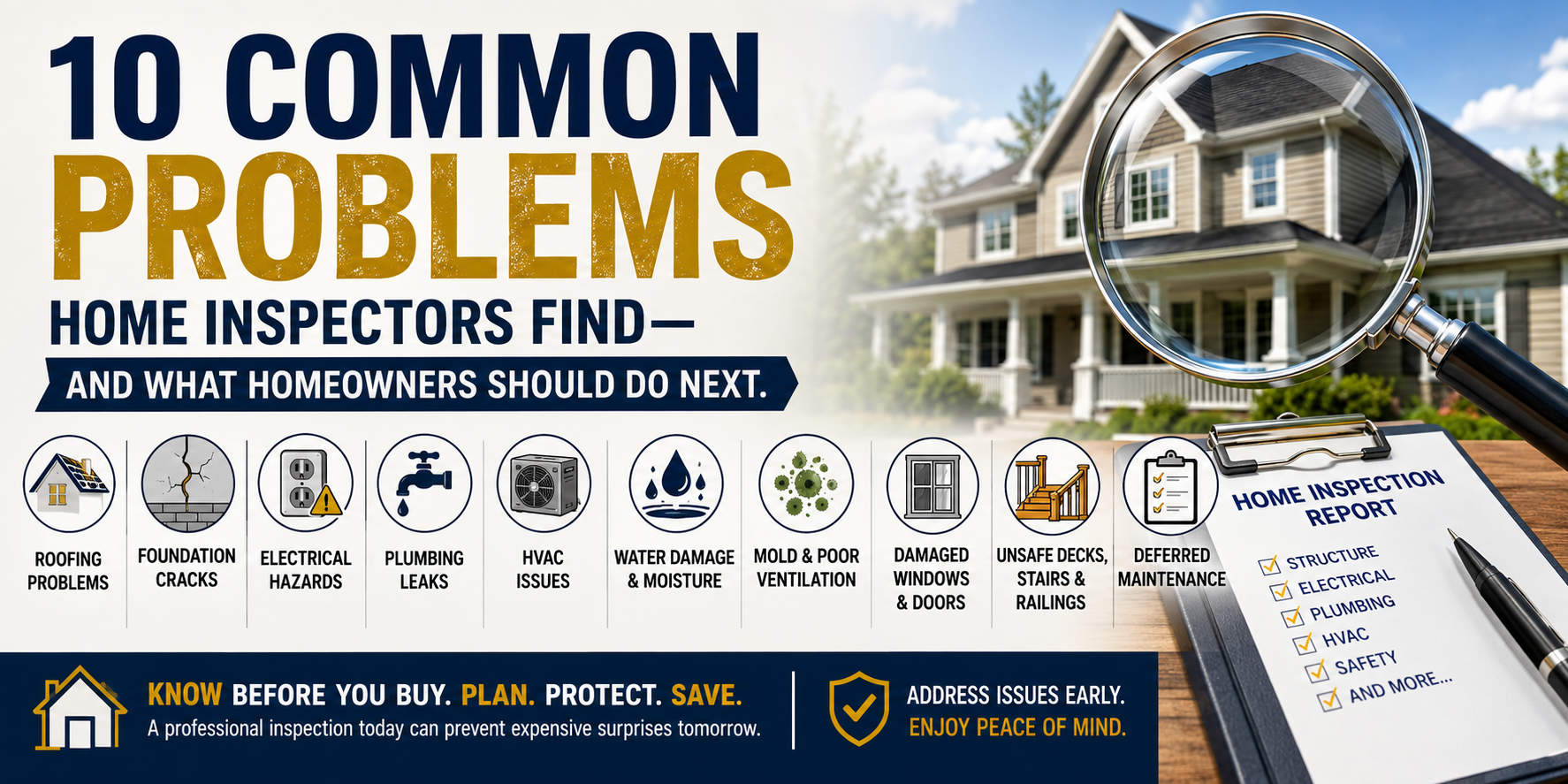
10 Common Problems Home Inspectors Find—and What Homeowners Should Do Next
Buying a home is exciting, but it’s also one of the biggest financial investments you’ll ever make. That’s why a professional home inspection is so valuable. While a house may appear to be in excellent condition, trained inspectors often discover hidden issues that could cost thousands of dollars if left unaddressed.
Fortunately, not every problem uncovered during a home inspection is a deal-breaker. Many home inspection problems can be repaired, upgraded, or planned for over time. Understanding the most common inspection findings helps homeowners prioritize repairs, negotiate with sellers, and protect their investment.
Here are ten of the most common issues home inspectors discover—and what you should do if they’re found in your home.
Below are Ten Commonly Found Home Inspection Problems
1. Roofing Problems
The roof is one of the first things inspectors examine because it protects everything underneath it.
Common roofing issues include:
- Missing or damaged shingles
- Flashing failures around chimneys and vents
- Roof leaks
- Soft or rotted roof decking
- Aging roofing materials
What You Should Do
Have a qualified roofing contractor evaluate the roof to determine whether repairs are sufficient or if replacement is necessary. Even minor leaks should be addressed immediately to prevent water damage, mold, and structural deterioration.
2. Foundation Cracks and Structural Movement
Small cosmetic cracks are common, but larger horizontal cracks, uneven floors, sticking doors, or sloping floors can indicate structural movement.
Inspectors look for:
- Foundation settlement
- Bowing basement walls
- Cracked support beams
- Water intrusion
- Uneven flooring
What You Should Do
Consult a structural engineer or foundation specialist before purchasing the home if significant movement is discovered. Early repairs are almost always less expensive than waiting.
3. Electrical Hazards
Older homes frequently contain outdated electrical systems that no longer meet today’s safety standards.
Inspectors often find:
- Double-tapped breakers
- Aluminum wiring
- Knob-and-tube wiring
- Ungrounded outlets
- Overloaded electrical panels
- Improper DIY wiring
What You Should Do
Hire a licensed electrician to correct any safety hazards. Electrical repairs are among the most important investments you can make because they reduce the risk of fire and electrical shock.
4. Plumbing Leaks and Aging Pipes
Even slow leaks can create expensive water damage over time.
Inspectors commonly identify:
- Dripping supply lines
- Corroded pipes
- Poor drainage
- Low water pressure
- Aging galvanized plumbing
- Water stains indicating hidden leaks
What You Should Do
Repair active leaks immediately. If older galvanized pipes are present, begin budgeting for replacement before major failures occur.
5. HVAC System Problems
Heating and cooling systems are expensive to replace, making their condition an important part of every inspection.
Common concerns include:
- Dirty or clogged filters
- Aging furnaces
- Inefficient air conditioners
- Poor airflow
- Unsafe venting
- Lack of maintenance
What You Should Do
Have the HVAC system professionally serviced after purchasing the home. Regular maintenance extends equipment life and improves energy efficiency.
6. Water Damage and Moisture Intrusion
Water is one of the biggest enemies of any home.
Inspectors frequently discover:
- Basement moisture
- Crawlspace humidity
- Window leaks
- Roof leaks
- Poor exterior drainage
- Rotting wood
What You Should Do
Determine where the water is coming from before making cosmetic repairs. Solving the source of moisture prevents recurring damage and mold growth.
7. Mold and Poor Ventilation
Bathrooms, basements, laundry rooms, and attics are common places for mold growth when moisture is trapped.
Inspectors may identify:
- Surface mold
- Condensation issues
- Poor attic ventilation
- Bathroom exhaust fans venting into the attic
- Excess humidity
What You Should Do
Correct the moisture problem first. Depending on the extent of the mold, professional remediation may be recommended.
8. Damaged Windows and Doors
Windows and exterior doors contribute to both energy efficiency and home security.
Common findings include:
- Broken window seals
- Drafty windows
- Rotting frames
- Doors that don’t latch properly
- Water intrusion around openings
What You Should Do
Repair damaged seals and weatherstripping when possible. Older windows may eventually justify replacement to improve comfort and reduce energy costs.
9. Unsafe Decks, Stairs, and Railings
Outdoor living areas are often overlooked by homeowners but receive close attention during inspections.
Inspectors frequently discover:
- Loose railings
- Improper ledger board connections
- Rotting deck supports
- Unsafe stair construction
- Missing guardrails
What You Should Do
Safety issues should be corrected as soon as possible. A qualified contractor can reinforce or rebuild unsafe structures before accidents occur.
10. Deferred Maintenance Throughout the Home
Perhaps the most common inspection finding isn’t one major defect—it’s years of neglected maintenance.
Inspectors often note:
- Caulking that has failed
- Peeling paint
- Dirty gutters
- Loose siding
- Missing weatherstripping
- Poor grading around the home
What You Should Do
Create a maintenance schedule and tackle smaller projects before they become expensive repairs. Preventive maintenance is one of the smartest investments homeowners can make.
Should You Walk Away From the Purchase?
Not necessarily.
Every home—even newly constructed homes—has imperfections. The purpose of a home inspection isn’t to find a perfect house. It’s to help buyers understand exactly what they’re purchasing.
In many cases, inspection findings become opportunities to:
- Negotiate repairs
- Request seller credits
- Reduce the purchase price
- Plan future maintenance
- Budget for upcoming improvements
Only major structural defects, serious safety hazards, or repair costs beyond your comfort level typically justify walking away.
Turning Inspection Findings Into Improvement Opportunities
Many inspection issues also present opportunities to improve your home’s value, efficiency, and comfort.
For example:
- Replacing old windows improves energy efficiency.
- Updating electrical systems enhances safety.
- Remodeling outdated kitchens and bathrooms increases resale value.
- Correcting drainage problems protects the foundation.
- Finishing a dry basement creates valuable living space.
Rather than viewing an inspection report as bad news, think of it as a roadmap for protecting and improving one of your largest investments.
Final Thoughts
A professional home inspection provides much more than a checklist—it offers peace of mind. Knowing the condition of a home’s structure, systems, and safety features allows buyers to make informed decisions with confidence.
Most inspection findings are manageable when addressed early. By understanding the most common issues inspectors discover, homeowners can prioritize repairs, avoid costly surprises, and enjoy their homes for years to come.
To learn more about what a professional inspection includes or to locate a qualified inspector, visit the American Society of Home Inspectors (ASHI)
Whether you’re buying your first home or your forever home, a thorough inspection is one of the smartest investments you’ll ever make.
Related Homeowner Resources
After your inspection, these guides can help you plan repairs and future improvements:
- Home Inspection: Why Every Buyer Should Hire a Professional Inspector
- Home Seller’s Checklist
- The Ultimate Remodeling Checklist
- Home Additions: Is It Time to Expand Your Living Space?
- Homeowner Problem Solving FAQs
- Basement Finishing Guide
- Window Replacement Guide
Are you ready to start your remodeling project?
If you’d like help connecting with a qualified remodeling professional, request a free, no-obligation estimate.