
Home Inspection
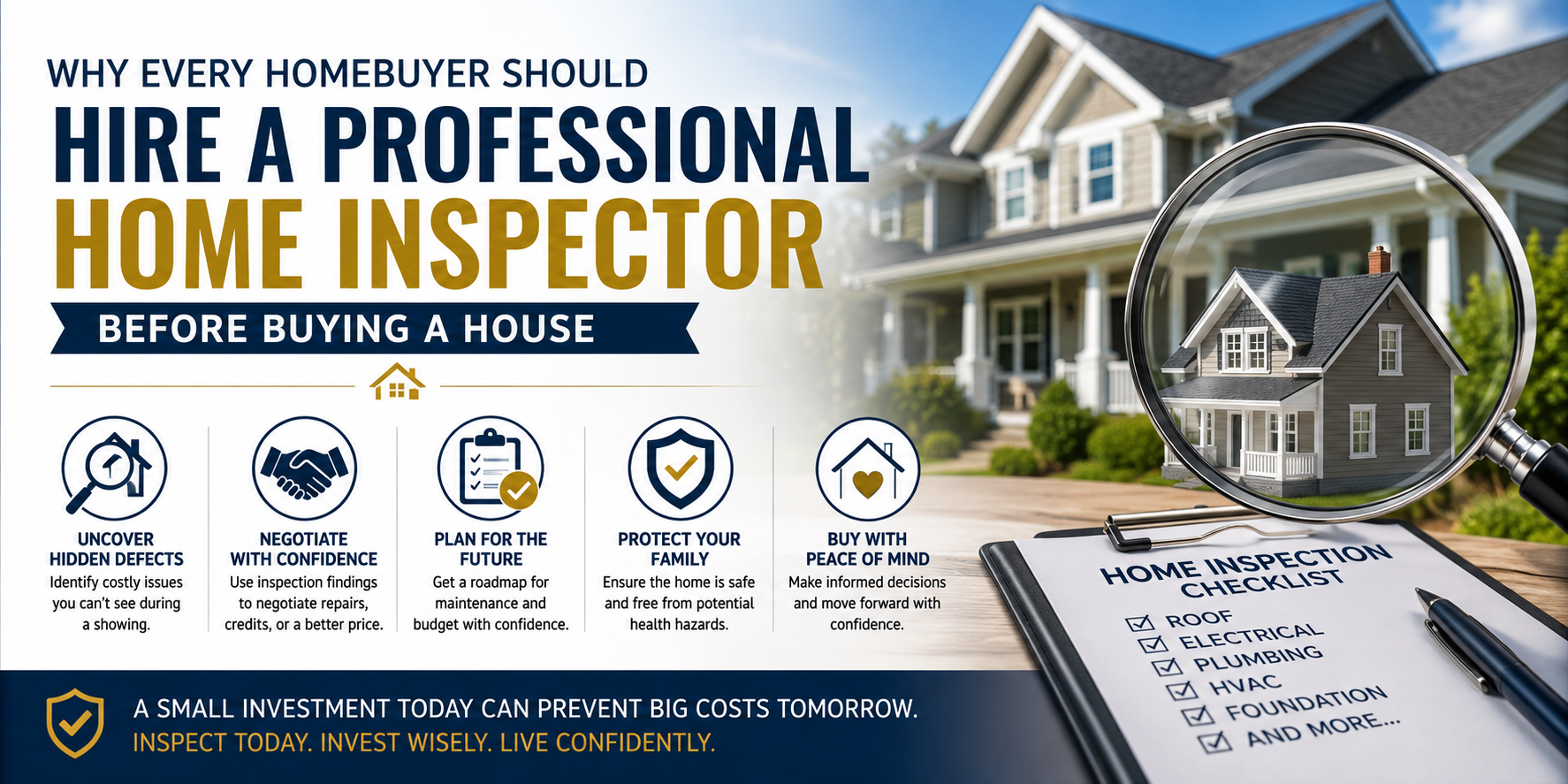
Why Every Homebuyer Should Hire a Professional Home Inspector Before Buying a House
Buying a home is one of the largest financial investments most people will ever make. While a home may look perfect during a showing, appearances can be deceiving. Fresh paint, new flooring, and attractive staging can hide expensive problems that may not become apparent until after you’ve signed the closing documents.
That’s why hiring a professional home inspector to do a home inspection is one of the smartest investments a homebuyer can make. For an average cost of around $400, a comprehensive inspection can identify hidden defects, provide valuable negotiating leverage, and give buyers the confidence they need before making such a significant commitment.
Uncover Hidden Problems With a Home Inspection Before They Become Your Problem
Most buyers simply don’t have the training or experience to recognize subtle warning signs of major issues. A licensed home inspector examines hundreds of components throughout the property, looking for defects that aren’t obvious during a casual walkthrough.
A professional inspection can reveal:
- Foundation cracks and structural movement
- Roof damage and leaks
- Plumbing leaks or aging pipes
- Electrical hazards and outdated wiring
- HVAC system problems
- Water intrusion and moisture damage
- Mold or mildew concerns
- Poor attic ventilation or insulation
- Drainage issues around the home
- Pest or termite damage
Discovering these problems before purchasing the home can save thousands—or even tens of thousands—of dollars in unexpected repair costs.
Gain Powerful Negotiating Leverage
A detailed inspection report gives buyers objective documentation of the home’s condition. Instead of relying on opinions, buyers have factual evidence when negotiating with the seller.
Depending on the inspection findings, buyers may be able to:
- Request repairs before closing
- Negotiate a lower purchase price
- Ask for seller credits toward repairs
- Request replacement of failing systems
- Adjust contract terms to reflect the home’s condition
In many cases, the inspection fee pays for itself many times over through successful negotiations.
Avoid Costly Financial Surprises
No one wants to move into their dream home only to discover they need a new roof, HVAC system, or foundation repair within the first year.
A home inspection provides valuable information about the age and condition of major systems, including:
- Heating and cooling equipment
- Water heaters
- Roofing materials
- Electrical panels
- Plumbing systems
- Windows and doors
Knowing the expected remaining lifespan of these components allows buyers to budget for future repairs instead of being caught off guard.
Protect Your Family’s Safety
A home inspector’s job isn’t just to identify defects—it’s also to identify safety hazards that could put your family at risk.
Common safety concerns include:
- Faulty electrical wiring
- Improperly installed gas appliances
- Carbon monoxide risks
- Fire hazards
- Unsafe decks or stairways
- Mold growth
- Missing smoke or carbon monoxide detectors
- Handrail and guardrail deficiencies
Correcting these issues before moving in creates a safer living environment and provides valuable peace of mind.
Make Confident Buying Decisions
Purchasing a home can be an emotional experience. It’s easy to fall in love with a beautiful kitchen or spacious backyard while overlooking serious underlying problems.
A professional inspection provides an objective evaluation based on facts—not emotions.
If the home is in excellent condition, buyers can move forward with confidence. If major defects are discovered, buyers have the opportunity to reconsider the purchase before it’s too late.
That knowledge alone makes the inspection invaluable.
A Home Inspection Can Help You Walk Away
Sometimes the best investment is the one you never make.
Many purchase agreements include an inspection contingency, allowing buyers to cancel the contract if significant issues are uncovered.
Rather than inheriting expensive repairs or unsafe living conditions, buyers can walk away and continue searching for a home that better meets their needs.
A Valuable Tool for Sellers, Too
Home inspections aren’t just beneficial for buyers.
Many homeowners choose to schedule a pre-listing inspection before putting their home on the market.
Benefits include:
- Identifying repairs before buyers discover them
- Reducing the likelihood of delayed closings
- Building trust through transparency
- Helping establish realistic asking prices
- Minimizing last-minute negotiations
By addressing issues in advance, sellers often enjoy smoother transactions and fewer surprises during escrow.
What Does a Home Inspection Include?
A thorough inspection evaluates virtually every major system in the home, including:
Structural Components
- Foundation
- Basement or crawl space
- Walls and framing
- Floors and ceilings
- Roof structure
Exterior
- Roofing materials
- Gutters and downspouts
- Siding
- Windows
- Doors
- Decks and porches
Mechanical Systems
- Electrical service and wiring
- Plumbing
- Heating system
- Air conditioning
- Water heater
- Ventilation
Interior
- Walls and ceilings
- Flooring
- Insulation
- Attic
- Built-in appliances
Safety Items
- Smoke detectors
- Carbon monoxide detectors
- Handrails
- Stairways
- Gas connections
- Venting systems
While inspectors don’t move furniture or perform destructive testing, they examine every accessible area to provide a comprehensive picture of the home’s condition.
The Best $400 You’ll Spend
Compared to the cost of purchasing a home, a professional inspection is a remarkably small investment.
For roughly the price of a family weekend getaway, buyers receive a detailed report that can:
- Prevent expensive repair surprises
- Improve negotiating power
- Protect their financial investment
- Identify safety concerns
- Help plan future maintenance
- Provide confidence before closing
Considering the potential savings, a home inspection may be one of the highest-return investments in the entire home-buying process.
Final Thoughts
Buying a home without a professional inspection is a risk that simply isn’t worth taking. Hidden defects can quickly transform a dream home into a costly financial burden.
Whether you’re purchasing your first home or your fifth, a qualified home inspector provides the information needed to make an informed decision. You’ll gain a clearer understanding of the property’s condition, stronger negotiating power, and the peace of mind that comes from knowing exactly what you’re buying.
To learn more about what a professional inspection includes or to locate a qualified inspector, visit the American Society of Home Inspectors (ASHI)
When it comes to protecting one of life’s biggest investments, a professional home inspection isn’t an expense—it’s an investment in your future.
Are you considering a remodeling project?
If you’d like help connecting with a qualified remodeling professional, request a free, no-obligation estimate.