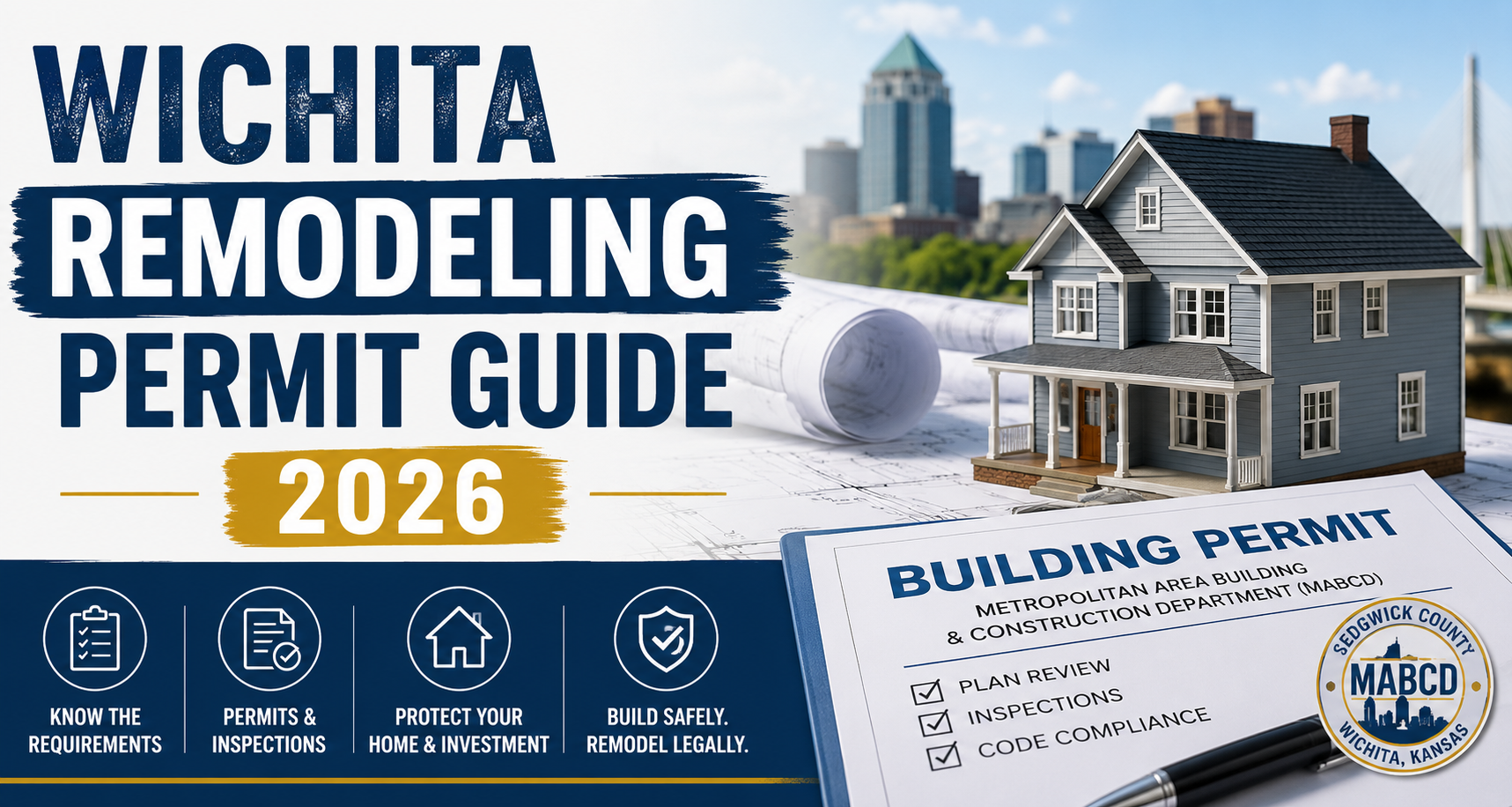
Wichita Remodeling Permit Guide 2026
Wichita Remodeling Permit Guide 2026
What Homeowners Need to Know Before Starting a Remodeling Project in the Wichita, Kansas Metropolitan Area
Whether you’re planning a kitchen remodel, bathroom renovation, basement finishing project, room addition, or accessibility upgrade, understanding Wichita’s permitting requirements can save you time, money, and headaches. Many homeowners are surprised to learn that permits are required for a wide range of remodeling projects, and failing to obtain the proper permits can lead to fines, delays, failed inspections, and even problems when selling your home.
This guide explains the permitting process in Wichita and Sedgwick County, who can perform the work, and how to avoid common mistakes.
Why Building Permits Matter
Building permits exist to protect homeowners, occupants, neighbors, and future buyers. Permits help ensure that construction work complies with adopted building codes and safety standards.
The Metropolitan Area Building and Construction Department (MABCD) serves residents throughout Sedgwick County and the City of Wichita by enforcing adopted building codes, providing public education, reviewing plans, issuing permits, conducting inspections, and helping ensure that construction projects are completed safely and legally.
According to MABCD, its mission is to protect the health, safety, and welfare of property owners, residents, tenants, businesses, and visitors through fair and consistent code enforcement.
What Is MABCD?
The Metropolitan Area Building and Construction Department (MABCD) oversees:
- Building permits
- Electrical permits
- Plumbing permits
- Mechanical permits (HVAC)
- Plan review
- Inspections
- Contractor licensing
- Code compliance
MABCD serves both the City of Wichita and many areas throughout Sedgwick County.
Do I Need a Permit for My Remodeling Project?
In many cases, yes.
Projects that commonly require permits include:
Kitchen Remodeling
Permits may be required when work involves:
- Electrical modifications
- Plumbing changes
- Structural alterations
- Relocating appliances
- Removing or modifying walls
Bathroom Remodeling
Permits are often required for:
- Plumbing changes
- Electrical upgrades
- Ventilation modifications
- Structural work
- Shower or tub relocations
Basement Finishing
Most basement finishing projects require permits because they often include:
- Framing
- Electrical systems
- HVAC work
- Plumbing installations
- Egress requirements
Room Additions
Virtually all room additions require permits and inspections.
Aging-in-Place Remodeling
Projects involving:
- Walk-in showers
- Bathroom accessibility modifications
- Structural changes
- Electrical upgrades
may require permits depending on the scope of work.
If you’re unsure whether your project requires a permit, contact MABCD before starting work.
Can a Homeowner Pull Their Own Permit?
Yes—but only under specific conditions.
To perform permitted work yourself, you must:
1. Own and Occupy the Home
You must both own and live in the home.
If you own the property but do not live there, you cannot perform the permitted work yourself. A licensed contractor must perform the work.
2. Complete the Homeowner Declaration Form
Before a permit can be issued, homeowners must submit the required Homeowner Declaration Form.
3. Meet Trade Requirements
When applying for a permit, homeowners must either:
- Designate a licensed subcontractor for any required trade work, or
- Schedule and pass the homeowner examination for each trade they intend to perform themselves.
These trades may include:
- Electrical
- Plumbing
- Mechanical (HVAC)
What Happens If I Want to Do the Trade Work Myself?
If you choose to perform electrical, plumbing, or mechanical work yourself:
You Must Pass the Required Homeowner Exams
The permit can only be issued after all required homeowner examinations have been successfully completed.
If you fail any required examination:
- A licensed subcontractor must perform that portion of the work.
If you do not schedule the required homeowner examinations at the time you apply for the permit:
- Licensed professionals will be required to perform the trade work once the permit has been issued.
What Are My Responsibilities as a Homeowner Contractor?
Many homeowners underestimate the responsibility that comes with pulling their own permit.
When acting as your own contractor:
- You may assume many of the same responsibilities as a licensed contractor.
- You may become responsible for code compliance.
- You may be responsible for arranging inspections.
- You may assume liability for construction defects or code violations.
Additionally, homeowners may be legally accountable to lenders or mortgage companies if modifications negatively affect the property.
Before deciding to perform the work yourself, carefully consider the time, knowledge, and responsibility involved.
Warning Sign: A Contractor Asks You to Pull the Permit
This is one of the most important things homeowners should know.
If a contractor asks you to obtain the permit on their behalf, treat it as a red flag.
In many cases, legitimate contractors pull permits themselves because they are responsible for the work being performed.
If a contractor asks you to get the permit:
Say “No.”
Instead, contact MABCD and verify that the contractor is properly licensed and insured before moving forward.
What Happens During the Permit Process?
Although every project is different, the process typically includes:
Step 1: Submit Plans and Application
Provide project details, drawings, and required documentation.
Step 2: Plan Review
MABCD reviews the project to ensure compliance with applicable codes.
Step 3: Permit Issuance
Once approved, permits are issued.
Step 4: Construction Begins
Work may begin after permits are issued.
Step 5: Inspections
Required inspections are scheduled at various stages of construction.
Step 6: Final Approval
Once all inspections are passed, the project can be finalized.
Resources Available Through MABCD
Homeowners can access information regarding:
- Permit requirements
- Building codes
- Contractor licensing
- Inspection scheduling
- Fee schedules
- Permit calculators
- Plan review requirements
- Environmental and land use regulations
- Trade certifications
- Continuing education resources
These resources are available through MABCD’s website and public service departments.
Where Can I Get More Information?
For questions about permits, inspections, licensing, or project requirements, contact:
Metropolitan Area Building and Construction Department (MABCD)
Phone: 316-660-1840
The department can help determine whether your project requires permits and explain the requirements that apply to your specific remodeling project.
For detailed online permit submission instructions, homeowners can review MABCD’s permit portal guide available through Sedgwick County.
Final Thoughts
Permits may seem like an inconvenience, but they are designed to protect homeowners and ensure remodeling projects are completed safely and legally. Whether you’re updating a bathroom, remodeling a kitchen, finishing a basement, or adding living space to your home, understanding Wichita’s permit requirements before construction begins can help prevent costly delays and mistakes.
When in doubt, ask questions before starting work. A quick call to MABCD can save significant time and expense later in the project.
Disclaimer: This article is provided for informational purposes only and should not be considered legal or regulatory advice. Permit requirements may change. Always verify current requirements directly with MABCD before beginning any remodeling project.
Are you ready to start your remodeling project?
If you’d like help connecting with a qualified remodeling professional, request a free, no-obligation estimate.