Aging in Place: Why More Americans Are Remodeling Their Homes for the Future
Aging in Place: Why More Americans Are Remodeling Their Homes for the Future
Creating a Safer, More Comfortable Home Without Sacrificing Independence
For most Americans, home is more than a place to live—it’s where memories are made, families grow, and life unfolds. As the nation’s population ages, an increasing number of homeowners are asking an important question:
“Can I stay in my home safely and comfortably as I get older?”
The answer for many families is yes, but it often requires thoughtful planning and strategic home modifications.
With approximately 71 million Americans expected to be age 65 or older by 2030, aging in place has become one of the most important topics in residential remodeling. Surveys consistently show that between 84% and 87% of older adults prefer to remain in their own homes rather than move to assisted living facilities or nursing homes. The desire for independence, familiarity, and connection to family and community continues to drive this growing trend.
Why Aging in Place Matters
Remaining in a familiar environment offers benefits that extend far beyond convenience.
Many seniors report feeling more comfortable, confident, and emotionally secure when they remain in their own homes. Familiar surroundings reduce stress and help preserve routines that contribute to overall well-being.
Aging in place also allows homeowners to:
- Maintain independence and control over daily activities
- Stay connected to family, friends, neighbors, church, and community organizations
- Avoid the emotional challenges associated with relocation
- Reduce exposure to illnesses that can spread in communal living environments
- Preserve a lifetime of memories and personal investments
For many families, the goal is not simply to remain at home longer—it’s to maintain quality of life.
The Challenges Many Families Face
While most older adults want to age in place, many households are not adequately prepared.
Studies indicate that only about 46% of homeowners feel their homes are ready to support them as they age. Common obstacles include:
Financial Limitations
Many retirees live on fixed incomes. Rising healthcare costs, inflation, and housing expenses can make home modifications feel overwhelming.
Safety Hazards
Traditional homes often contain features that become problematic with age, including:
- Bathtubs with high step-over walls
- Narrow doorways
- Slippery flooring
- Poor lighting
- Stairs without handrails
- Inadequate bathroom support features
Limited Support Networks
Many seniors face challenges related to transportation, food access, healthcare coordination, and social isolation. Home design alone cannot solve these issues, but it can significantly improve safety and independence.
The Financial Case for Aging in Place
One of the strongest arguments for aging in place is cost.
According to national averages, part-time in-home care may cost approximately $21,600 per year, depending on the level of assistance required.
Compare that with:
- Assisted Living Facilities: Approximately $54,000 per year
- Nursing Home Care: Often exceeds $116,000 per year
While home modifications require an upfront investment, they can substantially reduce long-term living expenses while allowing homeowners to remain in a place they love.
For many families, a bathroom remodel, accessibility upgrades, and improved safety features cost far less than even a single year of institutional care.
Bathroom Remodeling: The Foundation of Aging in Place
The bathroom is often the first area homeowners choose to modify—and for good reason.
Falls remain one of the leading causes of injury among older adults, and bathrooms present several common hazards.
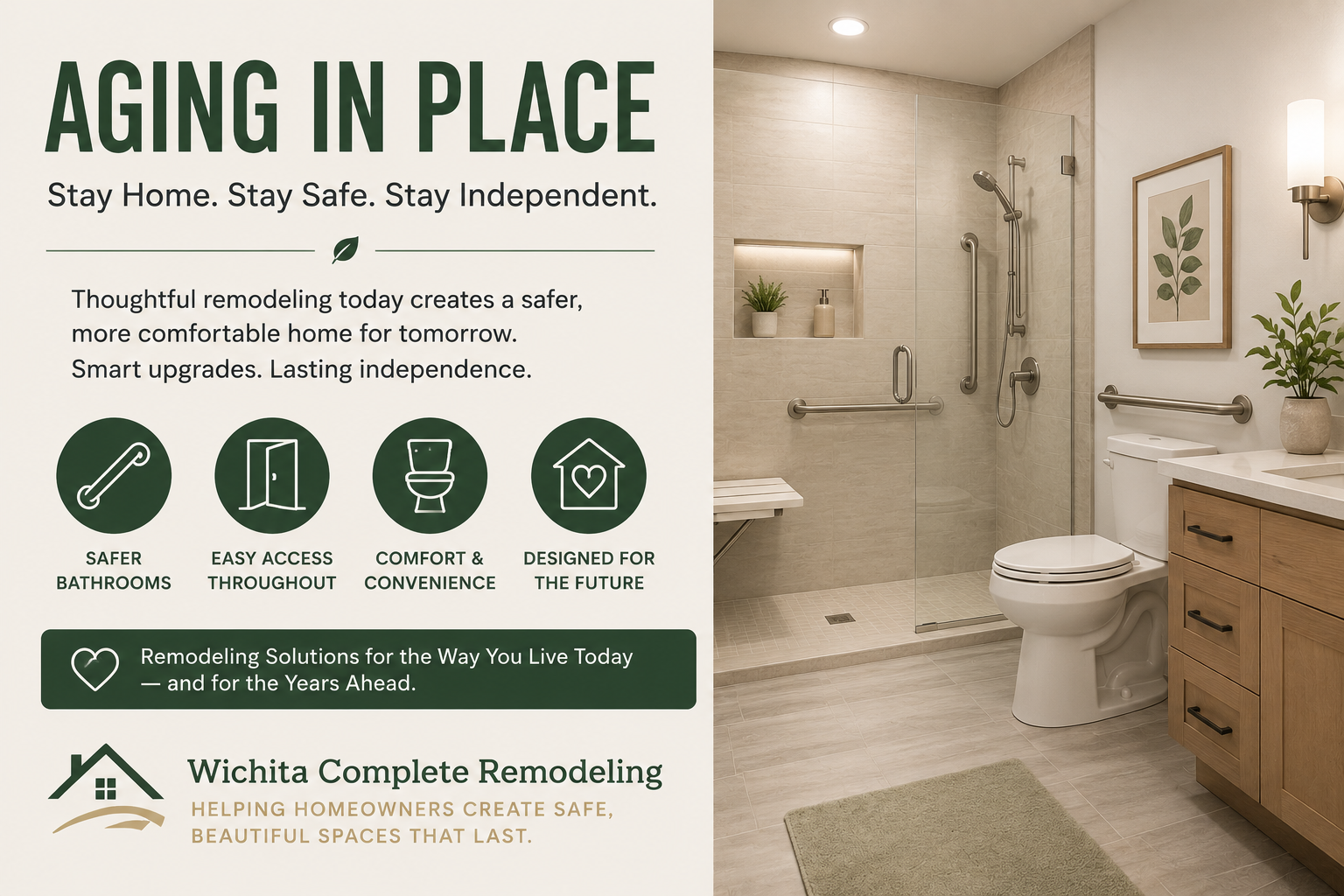
Popular aging-in-place bathroom upgrades include:
Curbless Showers
Walk-in showers eliminate the need to step over a tub wall, reducing fall risks while creating a modern appearance.
Grab Bars
Properly installed grab bars provide critical support when entering, exiting, or moving within the shower area.
Comfort-Height Toilets
Higher toilet heights reduce strain on the knees, hips, and back.
Non-Slip Flooring
Textured tile and slip-resistant surfaces improve safety without compromising design.
Handheld Shower Systems
Adjustable showerheads increase flexibility and accessibility for users of all mobility levels.
Kitchen Modifications That Improve Everyday Living
The kitchen is another area where thoughtful modifications can make a significant difference.
Common upgrades include:
- Pull-out shelves
- Soft-close drawers
- Improved task lighting
- Lower countertop workstations
- Easy-grip hardware
- Touchless faucets
These changes improve convenience while reducing physical strain.
Future-Proofing Your Home
One of the smartest remodeling strategies is preparing for future needs before they arise.
Many homeowners now request:
- Reinforced bathroom walls for future grab bars
- Wider door openings
- Lever-style door handles
- Single-level flooring transitions
- Improved lighting throughout the home
- Smart home controls for lighting and climate systems
These upgrades often add minimal cost during a remodel but can provide significant benefits later.
Technology Is Making Aging in Place Easier
Modern technology is helping homeowners remain independent longer.
Popular solutions include:
- Smart thermostats
- Motion-activated lighting
- Video doorbells
- Voice-controlled assistants
- Medication reminders
- Smart smoke and carbon monoxide detectors
These tools improve both safety and convenience while providing peace of mind for family members.
Resources Available to Homeowners
If you’re considering aging-in-place improvements, several organizations offer valuable guidance and support.
Helpful resources include:
- Area Agencies on Aging (AAA)
- National Institute on Aging (NIA)
- Local senior resource centers
- Occupational therapists specializing in home accessibility
- Qualified remodeling professionals experienced in aging-in-place design
A professional assessment can help identify the most effective improvements for your home and budget.
Planning Ahead Creates More Options
The best time to plan for aging in place is before mobility or health challenges arise.
By making thoughtful improvements today, homeowners can create safer, more comfortable environments that support independence for years to come.
Whether you’re planning for yourself, helping aging parents, or preparing a forever home, strategic remodeling investments can provide both immediate benefits and long-term peace of mind.
At Wichita Complete Remodeling, we help homeowners evaluate remodeling options, understand project costs, and connect with qualified remodeling professionals who can create safe, beautiful, and functional living spaces designed for the future.
Because growing older shouldn’t mean leaving the place you call home.
Are you ready to start your remodeling project?
If you’d like help connecting with a qualified remodeling professional, request a free, no-obligation estimate.