The Ultimate Remodeling Checklist
The Ultimate Remodeling Checklist: What Every Homeowner Should Do Before Starting a Renovation
A Step-by-Step Guide to Planning a Successful Remodeling Project
Whether you’re planning a kitchen remodel, bathroom renovation, basement finishing project, home addition, or aging-in-place upgrade, proper planning can mean the difference between a smooth remodeling experience and an expensive headache.
Many remodeling problems occur long before construction begins. Budget overruns, project delays, material shortages, and contractor disputes are often the result of poor planning rather than poor workmanship.
This remodeling checklist is designed to help homeowners prepare for a successful project by focusing on three critical pillars:
- Budgeting and Financial Planning
- Contractor Selection
- Material Selection
By working through these steps before demolition begins, you’ll reduce stress, avoid costly mistakes, and increase the likelihood of a successful remodeling project.
Step 1: Define Your Goals
Before discussing budgets, contractors, or materials, take time to determine exactly what you’re trying to accomplish.
Ask yourself:
- What problems am I trying to solve?
- What features are most important?
- What improvements would make the biggest difference?
- Am I remodeling for resale value, comfort, accessibility, or all three?
Separate Needs from Wants
One of the biggest mistakes homeowners make is treating every idea as equally important.
Create two lists:
Needs
These are improvements that solve real problems.
Examples:
- Water damage repairs
- Additional storage
- Improved accessibility
- Better lighting
- More functional layouts
Wants
These are desirable upgrades but not essential.
Examples:
- Decorative finishes
- Luxury fixtures
- Premium appliances
- Designer tile patterns
When budget decisions become necessary, this list will help guide priorities.
Step 2: Establish a Realistic Budget
A remodeling project should begin with financial planning rather than product selection. Many homeowners fall in love with materials and features before understanding what they can realistically afford.
Define Your Total Investment
Determine:
- Available cash savings
- Home equity financing
- Personal loans
- Other available funding sources
Know your maximum investment before requesting estimates.
Follow the 30% Rule
A commonly accepted guideline suggests that major renovations should generally not exceed approximately 30% of your home’s current market value.
For example:
If your home is worth:
- $250,000
A remodeling budget above:
- $75,000
may become difficult to recover in future resale value.
While every situation is different, this guideline can help protect your equity.
Establish a Contingency Fund
Unexpected discoveries are common during remodeling.
Examples include:
- Hidden water damage
- Structural deficiencies
- Electrical issues
- Plumbing problems
- Code violations
Most experts recommend setting aside:
10% to 20% of the project budget
for unexpected expenses.
Without a contingency fund, even minor surprises can create major financial stress.
Account for Hidden Costs
Many homeowners budget for construction but overlook related expenses.
Possible hidden costs include:
- Permit fees
- Engineering fees
- Design services
- Temporary housing
- Hotel expenses
- Additional utility costs
- Storage fees
- Dumpster and debris removal
- Sales taxes
Including these costs in your initial planning helps prevent unpleasant surprises later.
Step 3: Research Local Permit Requirements
Before finalizing plans, determine whether permits may be required.
Projects commonly requiring permits include:
- Electrical work
- Plumbing modifications
- Structural changes
- Room additions
- Basement finishing
- Major bathroom remodels
- Major kitchen remodels
Permit requirements vary by location. Taking time to research local building codes and zoning requirements early in the process can prevent delays once construction begins.
Step 4: Choose the Right Contractor
Selecting the right contractor is often the single most important decision you’ll make. The lowest price is rarely the best value.
Verify Credentials
Before hiring anyone, verify:
- Licensing requirements
- Insurance coverage
- Workers compensation coverage
- Business history
- Professional reputation
Qualified contractors should be willing to provide documentation when requested.
Review Previous Projects
Ask to see:
- Completed project photos
- Similar projects
- Customer references
A contractor’s past work often provides the best indication of future performance.
Contact References
When speaking with references, ask:
- Was the project completed on time?
- Did the project stay close to budget?
- Was communication consistent?
- Would you hire the contractor again?
These conversations can reveal valuable information that isn’t visible in online reviews.
Understand the Contract
Everything should be documented in writing.
A professional contract should clearly define:
- Scope of work
- Materials
- Payment schedule
- Project timeline
- Warranty information
- Change order procedures
Never rely on verbal promises.
Understand Billing Methods
Fixed-Bid Pricing
The contractor provides a set project price.
Advantages:
- Easier budgeting
- Greater cost certainty
Time and Materials
The homeowner pays for actual labor and materials used.
Advantages:
- Greater flexibility
- Easier project modifications
Understanding the billing structure helps prevent misunderstandings later.
Watch for Red Flags
Be cautious if a contractor:
- Requests unusually large upfront payments
- Pressures you to sign immediately
- Provides vague estimates
- Offers prices significantly below competitors
- Refuses to provide references
- Cannot verify insurance coverage
If something feels wrong, continue your search.
Step 5: Select Materials Carefully
Material choices affect:
- Cost
- Appearance
- Maintenance
- Durability
- Project timelines
Thoughtful selections can save thousands of dollars over the life of your home.
Prioritize Durability Over Trends
Trendy materials often look dated within a few years.
Instead, focus on products that offer:
- Long-term performance
- Easy maintenance
- Timeless appeal
Examples include:
- Quality cabinetry
- Natural stone
- Hardwood flooring
- Durable tile products
Well-chosen materials frequently outlast short-lived design trends.
Order Long-Lead Items Early
Many remodeling delays occur because materials arrive late.
Items that often require extended lead times include:
- Custom cabinetry
- Specialty tile
- Appliances
- Windows
- Custom doors
- Plumbing fixtures
Ordering early helps prevent construction delays.
Balance Cost with Simplicity
Highly marketed products often carry premium pricing.
In many cases, simpler materials provide:
- Better durability
- Greater design flexibility
- Lower maintenance requirements
- Better long-term value
Choosing quality over complexity often produces the best results.
Step 6: Prepare for Construction
As your project approaches, take steps to minimize disruption.
Consider:
- Protecting valuables
- Establishing temporary living arrangements
- Creating alternative kitchen or bathroom plans
- Securing pets
- Protecting furniture and flooring
Preparation helps reduce stress during construction.
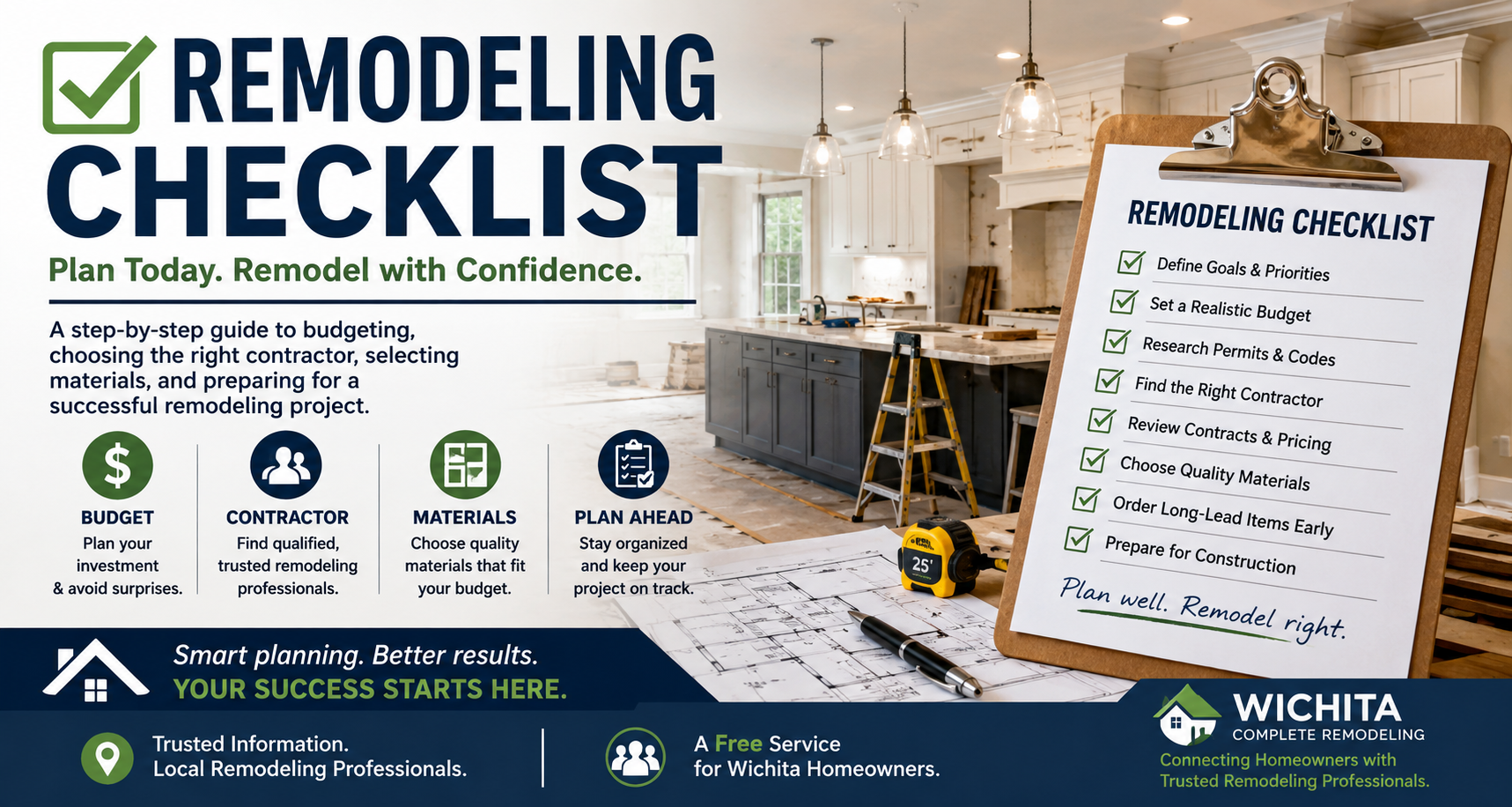
Remodeling Checklist Summary
Before your project begins, confirm that you have:
✅ Defined your goals
✅ Prioritized needs versus wants
✅ Established a realistic budget
✅ Reserved a 10% to 20% contingency fund
✅ Considered hidden costs
✅ Researched permit requirements
✅ Verified contractor credentials
✅ Checked references
✅ Signed a written contract
✅ Selected materials
✅ Ordered long-lead items
✅ Prepared your home for construction
Final Thoughts
A successful remodeling project starts long before demolition begins. Careful planning, realistic budgeting, qualified contractors, and thoughtful material selections can dramatically improve your remodeling experience.
By following this checklist, homeowners can reduce surprises, avoid common mistakes, and move into construction with confidence.
The more decisions that are made before the first wall is opened, the smoother the project is likely to be from start to finish.
Are you ready to start your remodeling project?
If you’d like help connecting with a qualified remodeling professional, request a free, no-obligation estimate.